
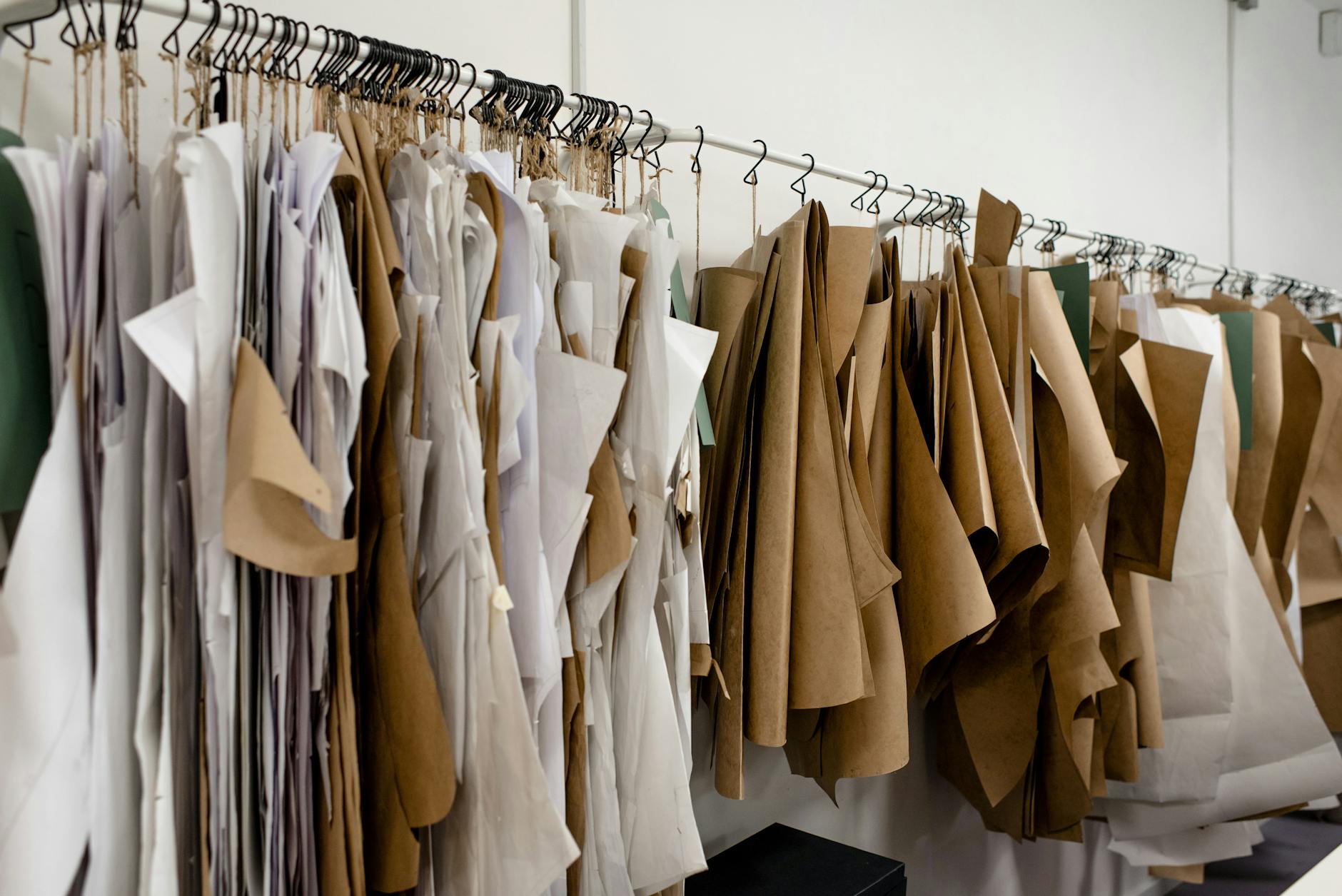
If you have been to my classes you know that I LOVE online PDF patterns. In my opinion the patterns from good PDF companies are better drafted, more inclusive, longer lasting and just in all ways beat old-school packet patterns that you had to fish out of a filing cabinet in Fabricland.
Notice how I said GOOD pattern companies though. This is the hardest part about finding PDF patterns, in the last year or so the market has become flooded with AI generated patterns that are garbage – I’m looking at you Etsy. These patterns do not sew up into the garment they promise to and worse, they will probably make you feel that it is your lack of skill that caused it. Not true! AI patterns are a frankenstein’s monster made of stolen tid bits of real designs found online, they were not designed to help you make anything, they are there to take your money.
So how do you find good patterns and good pattern companies?
There are so many amazing companies out there. Below I will take you through some of my top recommendations, along with tips on how to tell if a pattern is worth purchasing and a big warning about touching anything on Etsy now.
Let’s make this easy and start with pattern company suggestions.
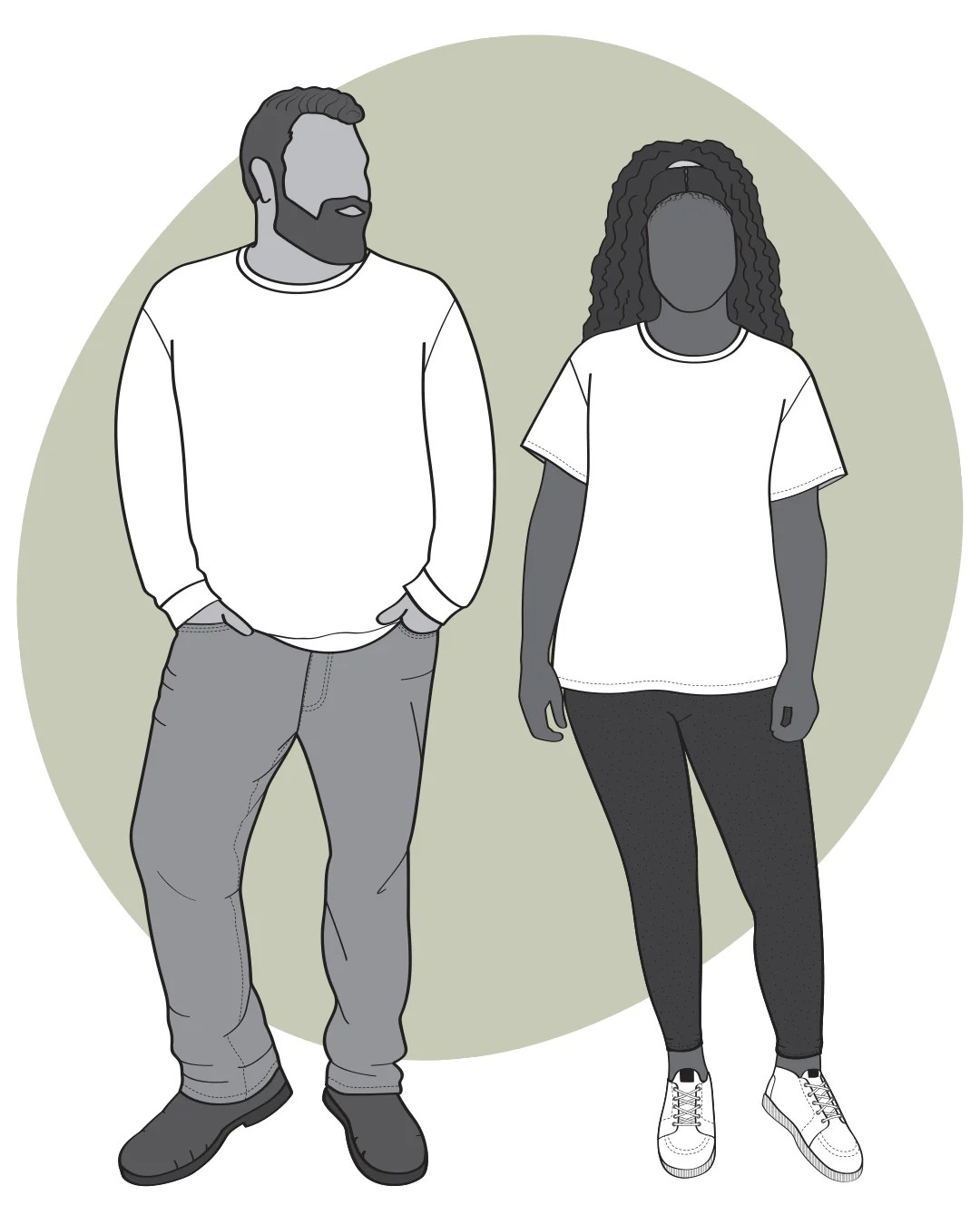
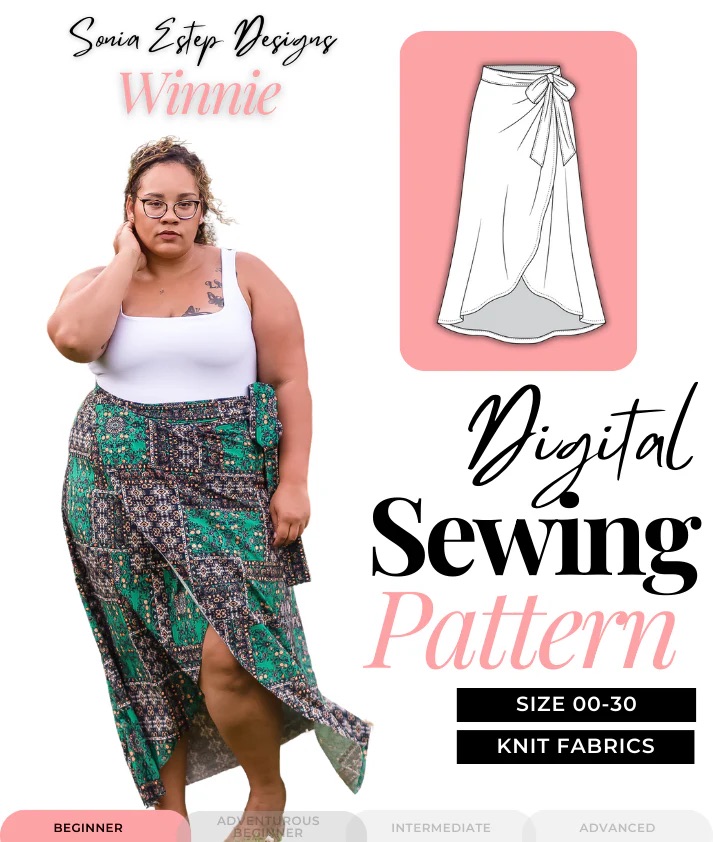
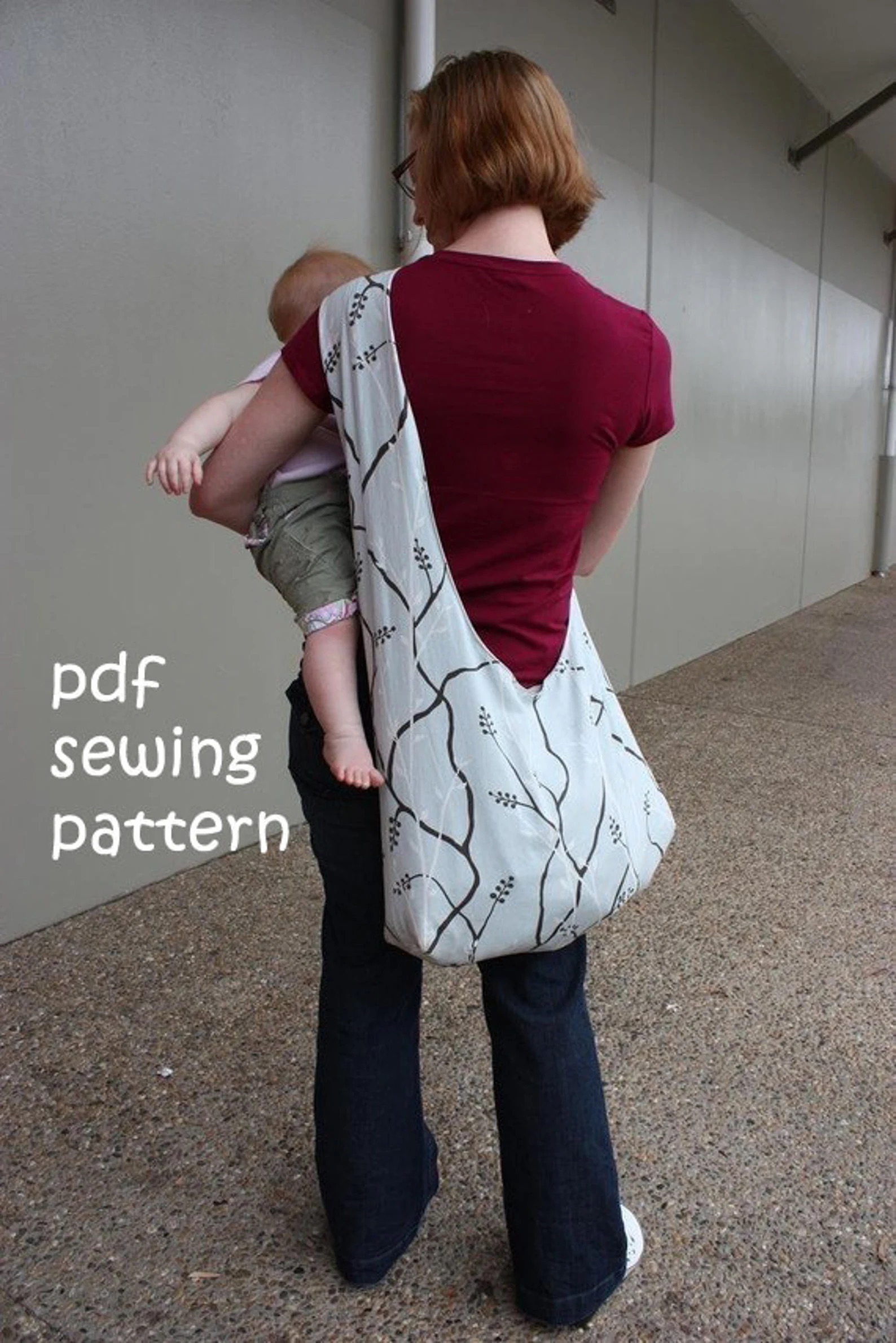
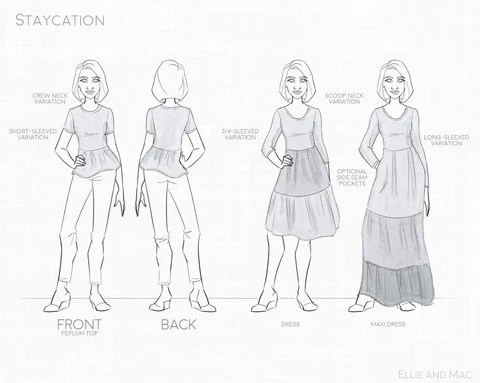
All of these companies provide amazing patterns with a range of different styles. They have excellent instructions that are easy to follow and often provide extra online resources that can help you work through your project. All of them also have options that are great for beginners – and usually patterns that will help you grow and develop your skills as you begin to improve too. Note, I will only ever recommend companies that are size inclusive.
Petite Stitchery Co – amazing for basics and advanced beginners, lots of comfy and fashion forward options
Helen’s Closest– very classic drafting and designs that can be played with for your own spin. I love Helen as she has an amazing blog that will show you so many extra ways to use her patterns to get the most you can from them. She is the maker of my favourite t-shirt and leggings patterns (I am wearing both right now as I write).
Ellie and Mac – a great place to start as a beginner, some fun style options for adults and children, with super easy to follow instructions and lots of online support.
Waves and Wild – my favourite overalls for me and my kids
Twig and Tale – all things cottage-core
Greenstyle – Think all things athletic and outdoors
Jalie – Great for athletic makes and bathingsuits – do note that not all patterns are size inclusive though
Style Arc – A wide variety of patterns for different fabrics, I would say this is the closest I get to more classic packet pattern styles
Tilly and the Buttons – Very cute and easy to make patterns (plus she started on the Great British Sewing Bee)
George and Ginger – A bit of a rocker-twist to some awesome patterns
Charm Patterns by Gertie – Vintage, vintage, vintage – maybe not totally beginner friendly though, as the designs tend to be fairly technical
Sonia Estep Designs – some great basics and very good for beginners. She does sometimes favour using simple construction (read: could be done in a better way) to make things more beginner friendly. Not totally a bad thing, it makes it more accessible, but you may learn better techniques from other companies down the line.
Seamwork – Some very fun designs that are great for beginners. They offer a subscription service for patterns, but you can purchase things individually too. I personally don’t think subscriptions are worth it for sewing patterns.
Sew Liberated – Some incredibly fun designs that are a great way to level up your beginner skills and try some fancy finishes
Boo and Lu – If you follow my social media, you know this is my go-to company for flouncy dresses for my daughter
Peekaboo Patterns – Great classics for kids. They do adult patterns too, but I have not tried any of them myself.
Lowland Kids – Kids and adult patterns. Some really nice classics, but be careful if you are a beginner – there pattern instructions are sometimes a bit jumpy and they use cut charts for any pattern pieces that are squares or rectangles – I find this can be a bit hard for laying out when you are just starting to sew.
Little Lion King – I am just starting to use this company myself – though it is one my friends all-time fav for her kids. I do find that sometimes they overcomplicate construction, but they do have some awesome kids designs.
RockerByeDestash – great kids patterns, especiallly leggings
This is by no means an exhaustive list (or all the pattern companies I personally use), but it is a place to start exploring what might be out there. All of these companies produce good quality patterns and can be used as an example of what to look for.
So how do I spot other good patterns?
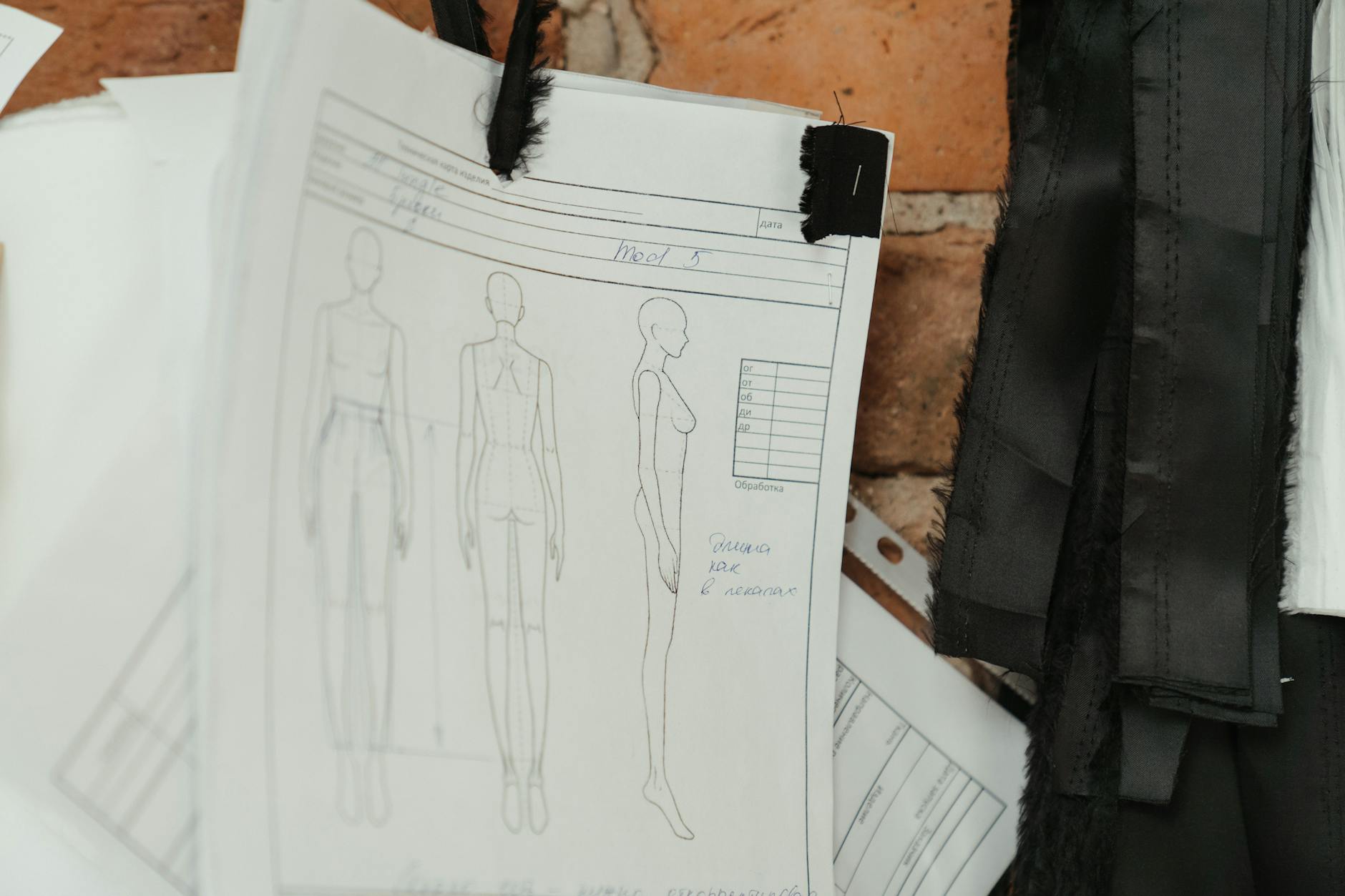
Here is a list of some of the things you should be able to see on a pattern that can help you tell if you have found a quality product:
- Real photographs of finished products – the more the better
- With AI images, I would even be cautious of listings with only one or two pictures
- It is fine if they include sketched/drawn versions of the garment too, but there should also be photographs
- Most great companies have a LOT of pattern testers, this insures that they have patterns that WILL fit well when they are sewn up in any size. This means, they should also have a lot of pictures to show off with their patterns. If the listing is a bit limited, check their social media. People who sew like to show off what they make, so you should be able to find examples on instagram.
- A size chart
- You should not only be able to see the range of sizes they offer BEFORE you purchase the pattern, but you should be able to see what those sizes are based on body measurements. A size 16 in one company is not the same in another, they need to provide a chart that you can compare your own body measurements to.
- This is a standard thing in sewing, so if its not there it is a HUGE red flag
- Also, sewing is about getting control over what you wear without stupid fashion industry influence saying who can wear what – don’t support companies that don’t make patterns that are inclusvie of your body.
- A fabric requirement chart
- After you look up your size, you should be able to tell exactly how much fabric you need and what type of fabric – trust me this will be helpful as your fabric stash grows
- You should be able to see this before purchasing your pattern. I will give though that it is not always a complete no-go if they don’t have it, but it should raise some warning
- A list of other notions
- You should be able to see what other supplies you will need: interfacing, elastic, buttons, zip, etc.
- Essentially you should be able to get all the supplies you would need before you purchase the pattern
- I mentioned it before, but I will say it again – They should have social media
- And that should include lots of examples of the makes by their testers, but also people who have tagged the company after they have made something
So why no Etsy?
The first thing that will pop up when you search for patterns online is Etsy suggestions and in the past this might have been a good place to go. There probably are still legitimate sellers on there, but AI has made it almost untenable to shop there for patterns. If you are a beginner and do not know what to look for, don’t take the risk. At best, you will lose some money on a pattern that won’t work. At worst, it will make you think you can’t sew and stop you from getting into a craft that can be such a fun and creative outlet – and really is more accessible than you might think.
The issue with Etsy is not just that they allow AI sales, it is also that there is something going on with the reviews that makes these patterns look legitimate. I have read through many reviews that all make the pattern company seem totally legit, only to purchase a pattern or check reddit and find out everything was AI and the pattern does not make anything – or at least it won’t without a lot of garment knowledge and changes.
If you find something on Etsy and feel like you just HAVE to have the pattern. Check off the platform first. Search on reddit sewing forms for the company name, check social media out, there are places that might be able to tell you if they are legit before your purchase – just don’t trust the etsy review section (even if there are photos there). I saw a great bit of advice a little while ago – pattern drafting takes a LONG time, so you should be suspicious if a company on Etsy that has no personal website and no social media but is able to produce large numbers of patterns in very short time spans – a crazy high number of listings is a warning not a green light.
Not all bad pattern drafting is AI though. The list above will also help you weed out real people who just don’t make really good patterns. This does happen. They may be just starting out, or may overestimate their own skill levels, but drafting patterns is an art unto itself – especially drafting ones in multiple sizes to be sold to other people. It is worth making sure the person you buy from knows what they are doing.
What about old-school packet patterns?
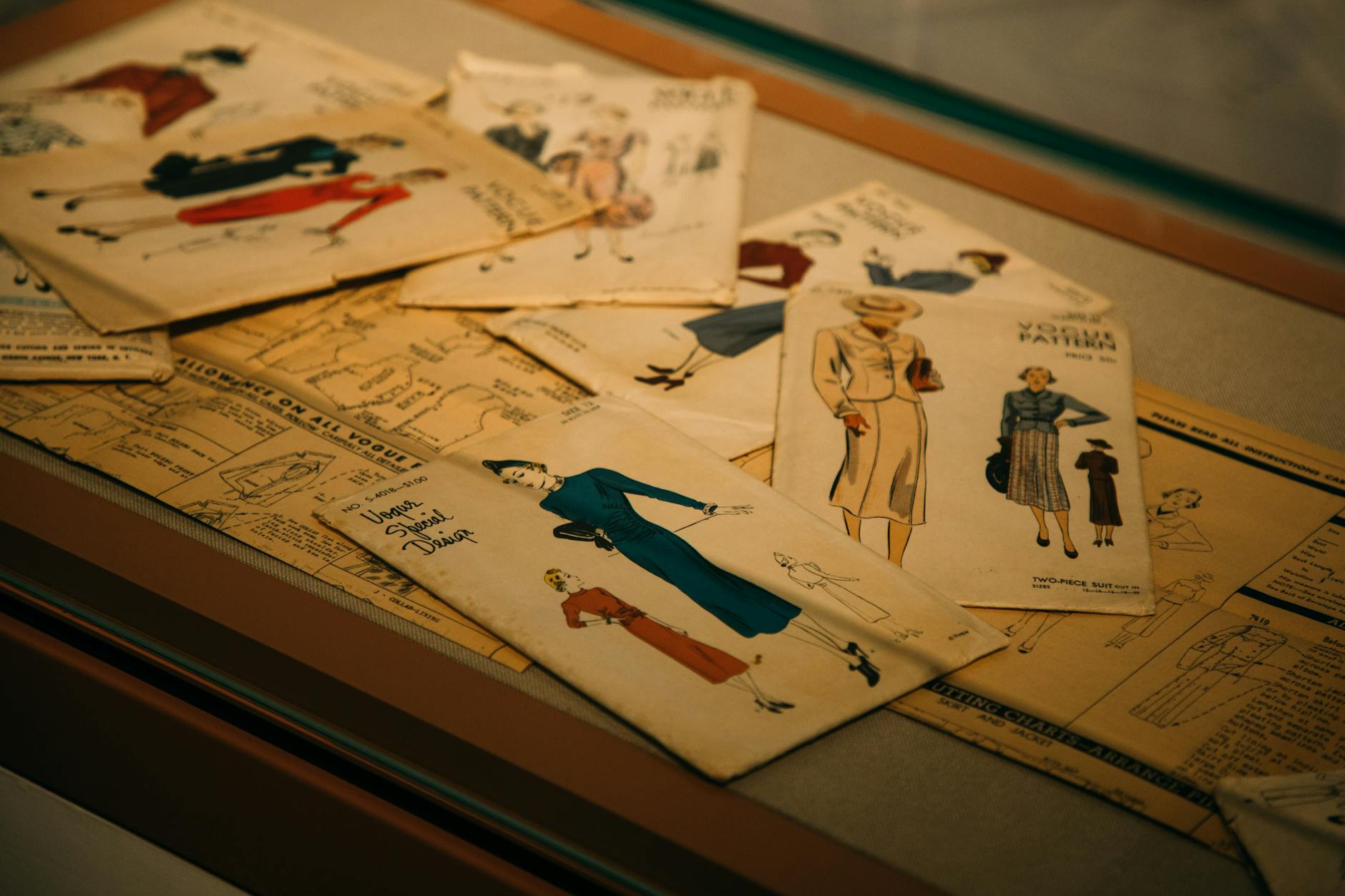
I am not a big fan of the old-school packet pattern, I will admit that. These are the ones like Simplicity, McCalls, Vogue, etc. They can have their place – they have a huge catalogue of patterns and can provide styles that don’t exist elsewhere (as one of my crazy-awesome victorian gothic loving students pointed out to me). They have a lot of draw backs though, especially for beginners.
Most notably they do not have detailed instructions – even the patterns marked as ‘easy’ often skip steps in the instructions and explanations as they assume a high level of background knowledge in sewing. This can make the designs very hard to complete without help. I also feel that a large majority of the styles are a bit dated – now that is personal choice, so it may not be the case for others. Finally, they are NOT inclusive. They may claim to have plus sizing, but when you actually delve into their size charts they are consistently way more limited than the majority of PDF companies. They still take the view point that if you need a bigger size you should draft it yourself and I am not ok with that. It just means I would not choose these when there are so many awesome options with PDF companies instead.
So I hope you have fun looking around online and finding the amazing expanse of patterns that exist with PDF companies. Now that you know how to spot the good ones, have fun seeing just how far home sewing has come and how much creativity you can have with what you make!
 The Coastal Stitcher
Leave a comment